
 Performance Marketing vs Digital Marketing: The Ultimate 2025 Guide
In the modern business world, where every click, impression, and conversion counts, marketing has evolved far beyond traditional billboards and TV commercials. Today, success is driven by data, strategy, measurable outcomes — and the ability to optimize every step of the customer journey.
This is where two powerful concepts come into the spotlight: Performance Marketing and Digital Marketing. Although these terms are often used interchangeably, they serve different purposes and offer unique advantages. Understanding Performance Marketing vs Digital Marketing is essential for brands that want to choose the right strategy based on goals, budgets, and target audiences.
Whether you’re aiming for immediate, trackable results or long-term brand growth, knowing the difference between these two approaches can transform your marketing outcomes.
In this comprehensive 2,000-word guide, we’ll break down everything you need to know about Performance Marketing vs Digital Marketing — what they are, how they differ, when to use each, and how you can combine both for maximum impact in 2025 and beyond.
1.what is digital marketing?
-
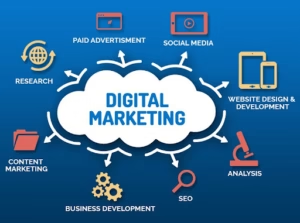
Optimizing your website to rank higher on Google forms a core part of digital marketing. Digital marketing refers to all online efforts made by businesses to promote their products or services using the internet and digital technologies. It’s the broad umbrella that covers every marketing activity conducted online — from SEO and social media to email marketing and paid advertising.
Digital marketing aims to:
- Build brand awareness
- Drive traffic to your website
- Engage target audiences
- Convert visitors into customers
- Maintain long-term brand loyalty
In simple words, digital marketing is the art and science of promoting your business online.
Key Channels of Digital Marketing
- Search Engine Optimization (SEO):
r relevant keywords and attract organic traffic. - Content Marketing:
Creating valuable content (blogs, videos, infographics, podcasts) to attract, educate, and engage your audience. - Social Media Marketing (SMM):
Using platforms like Facebook, Instagram, LinkedIn, and YouTube to build communities, increase engagement, and promote products. - Email Marketing:
Sending newsletters, offers, and updates directly to your subscribers to nurture relationships and encourage conversions. - Pay-Per-Click Advertising (PPC):
Running paid campaigns (like Google Ads or Meta Ads) to instantly reach your target audience. - Affiliate Marketing:
Partnering with affiliates or influencers who promote your products for a commission on sales or leads. - Online PR & Influencer Marketing:
Leveraging media coverage or influencers to enhance your brand reputation and reach.
Optimizing your website to rank higher on Google is a crucial part of digital marketing. Digital marketing refers to all online efforts made by businesses to promote their products or services using the internet and digital technologies. It’s the broad umbrella that covers every marketing activity conducted online — from SEO and social media to emails and paid ads. Understanding this is essential when comparing Performance Marketing vs Digital Marketing as two different approaches.
2. What Is Performance Marketing? 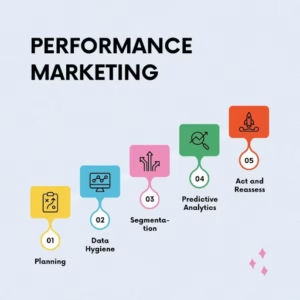
Performance marketing is a results-driven subset of digital marketing focused entirely on measurable outcomes. Instead of paying for exposure (like impressions or reach), you only pay when a specific action is completed — such as a click, inquiry, purchase, or download. That’s why it’s called “performance” marketing: your budget directly correlates with how well your campaign performs. This is a core element in the broader comparison of Performance Marketing vs Digital Marketing.
Common payment models include:
CPC (Cost Per Click): You pay solely for each click your ad receives.
CPM (Cost Per Mille): You’re charged for every thousand times your ad is shown.
CPL (Cost Per Lead): You pay for each qualified lead generated.
CPA (Cost Per Action/Acquisition): You pay when a specific action, like a sale, happens.
RevShare (Revenue Share): You share a percentage of each sale with your partners.
Performance marketing thrives on data, analytics, and ROI measurement. Every campaign is tracked in real time, allowing marketers to tweak, optimize, or pause underperforming ads.
Key Channels of Performance Marketing
Affiliate Marketing – Paying partners who drive sales or leads for your brand.
Programmatic Advertising – Automated ad buying based on user behavior and data.
Retargeting Campaigns – Showing ads to users who have interacted with your website before.
Native Advertising – Ads that blend into content, such as sponsored articles or product placements.
Social Media Performance Ads – Paid ads on Facebook, Instagram, or TikTok with conversion goals.
In short, performance marketing is like digital marketing with a laser focus on ROI.
3. Performance Marketing vs Digital Marketing: The Key Differences 
Although performance marketing falls under the broader digital marketing umbrella, there are clear differences in strategy, goals, and outcomes.
| Aspect | Digital Marketing | Performance Marketing |
| Definition | The overall process of promoting brands using digital channels. | A specific strategy focused on measurable results and ROI. |
| Goal | Build awareness, engagement, and loyalty. | Drive actions like clicks, leads, or sales. |
| Payment Model | Pay for ad placements, management, or content creation. | Pay only for completed actions (CPC, CPA, CPL, etc.). |
| Focus | Long-term brand visibility and relationship building. | Short-term measurable performance and direct ROI. |
| Timeframe | Takes time (months) to build traction. | Delivers quick results (days or weeks). |
| Metrics | Reach, impressions, engagement, and traffic. | Clicks, conversions, leads, and revenue. |
| Risk | Lower data dependency; results may be slower. | Low risk due to data tracking and performance-based billing. |
| Best For | Building authority and long-term audience trust. | Driving direct sales and quick returns. |
To summarize:
👉 Digital marketing = long-term growth.
👉 Performance marketing = immediate, measurable impact.
4. Why Performance Marketing Is Gaining Popularity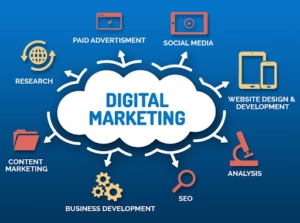
-
In today’s climate of financial unpredictability and cost-conscious operations, marketing accountability is more important than ever. Businesses want clear, measurable returns, not empty assurances.
This shift has fueled the rapid rise of performance marketing, thanks to its ability to deliver results that truly matter. It provides:
-
Instant performance insights
Track every action as it happens. -
Insight-driven optimization
Make smarter decisions backed by real data. -
Strong return on investment
Spend only on strategies that genuinely convert. -
Easy scalability and adaptability
Adjust or expand campaigns based on real-time results. -
Minimal financial risk
You pay strictly for outcomes, not for guesswork.
5. Advantages of Digital Marketing
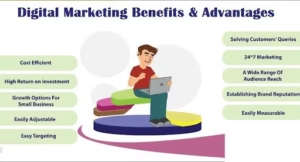 Digital marketing offers a long-term, holistic approach to brand success. Here’s why it remains indispensable:
1. Builds Strong Brand Awareness
SEO, social media, and content marketing help establish your brand identity and authority in your niche.
2. Reaches a Global Audience
With billions online, you can reach potential customers anywhere in the world.
3. Cost-Effective (Especially Organic Marketing)
Compared to traditional advertising, digital marketing provides better ROI and long-term visibility.
4. Encourages Engagement
Through content, communities, and storytelling, you can connect emotionally with your audience.
5. Supports Long-Term Growth
Consistent online presence builds reputation, credibility, and customer loyalty over time6. Advantages of Performance Marketing
-
- Performance marketing is perfect for businesses that need quick, measurable outcomes. Here’s why marketers love it:1. Pay Only for ResultsNo wasted budget — you pay only when users take your desired action.2. Immediate Insights and ROI TrackingWith tools like Google Ads, Meta Business Suite, and affiliate dashboards, you can track performance in real time.3. Easily ScalableIf a campaign performs well, increasing the budget can multiply conversions almost instantly.4. Optimized for ConversionsEvery aspect — from targeting to copy to bidding — is optimized for performance.5. Low Risk, High RewardSince the model is results-based, your investment risk is minimal.
7. Challenges in Both Approaches
-
- Drawbacks of Each Approach
- Limitations on Both Sides
- Obstacles Present in Both Methods
- Common Challenges Across Both Approaches
- Issues Encountered in Either Approach
- Shared Difficulties Between the Two Approaches
- Potential Pitfalls in Both Strategies
- Constraints Found in Each Method
- Hurdles Within Both Approaches
- Weaknesses Present in Both Options
8. When to Use Digital Marketing
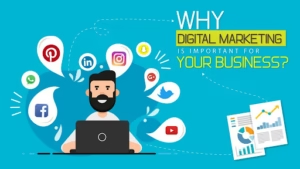
You should prioritize digital marketing if:
You’re launching a new brand and need to build awareness.You want to establish credibility in your niche.Your goal is long-term SEO traffic and organic growth
You want to grow a community that truly connects with your brand.
.Example:
A new educational institute might invest in:
SEO blogs about career tips,Instagram reels showcasing student life,Email newsletters, andYouTube tutorials.These digital marketing strategies will position the brand as trustworthy and authoritative, even before running paid ads.9. When to Use Performance Marketing
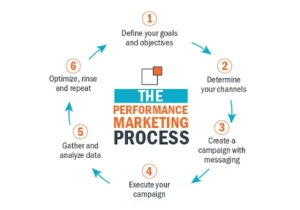
You should focus on performance marketing if:
You want instant measurable results.You have specific conversion goals (sales, app installs, leads).
You’re working with a limited budget and want guaranteed ROI.
You’re launching a product or seasonal campaign.
Example:
An eCommerce store promoting Diwali discounts can run:
Google Ads targeting “buy festive lights online,”Instagram carousel ads with promo codes,
Affiliate influencer campaigns with trackable links.
These will generate immediate conversions, boosting short-term sales.
10. The Smart Approach: Combine Both for Maximum Impact
The real magic happens when you combine digital and performance marketing.
Think of digital marketing as building the house and performance marketing as filling it with guests.
Here’s how they work together:
Digital Marketing Stage
Performance Marketing Stage
Build a website optimized for SEO.
Run Google Ads targeting transactional keywords.
Publish valuable blogs and videos.
Retarget readers with product offers.
Grow social media following.
Launch paid campaigns to convert followers.
Use email newsletters to nurture leads.
Track open rates and automate conversion workflows.By merging both, you create a sustainable ecosystem — where organic strategies build trust and paid strategies deliver fast results.
11. The Future of Marketing: Trends for 2025 and Beyond
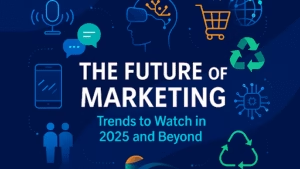
Both digital and performance marketing are evolving rapidly. Here are upcoming trends shaping the future:
AI and Machine Learning
Tools like Google Performance Max and Meta Advantage+ will automate targeting, bidding, and ad optimization.Personalization at Scale
Tailored ads, dynamic product recommendations, and AI-based chatbots will enhance engagement.First-Party Data Revolution
With the death of cookies, brands will rely more on customer data from CRMs, email lists, and loyalty programs.Video and Short-Form Content Dominance
Reels, Shorts, and TikToks will remain the most engaging ad formats.Omnichannel Integration
Seamlessly connecting SEO, paid ads, and email automation will become essential.Sustainability and Ethical Marketing
Transparency and responsible advertising will influence customer trust.In short, the future isn’t about choosing digital vs performance marketing — it’s about combining both intelligently with technology and data.
12. Final Verdict: Performance Marketing vs Digital Marketing
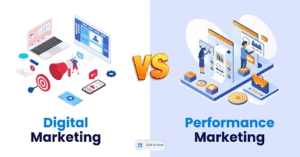
Let’s wrap it up.
Digital Marketing builds your foundation — brand, trust, and long-term visibility .Performance Marketing accelerates your growth — conversions, leads, and measurable ROI.
You can’t rely only on one. A successful modern business needs both — digital marketing for awareness and performance marketing for revenue.
Conclusion
When comparing performance marketing vs digital marketing, remember — they’re not competitors but complements.
If your goal is brand storytelling, choose digital marketing.If your goal is instant sales or measurable ROI, go with performance marketing.
But if you want sustainable growth, use both together — brand visibility fuels performance, and performance drives profitability.
In 2025 and beyond, the most successful marketers will be those who master both — blending creativity with data, and storytelling with performance.
Author:afnan