
Creating exceptional content is only the first step in today’s fast-evolving digital marketing environment. Whether it’s a thought-provoking blog post, an engaging video, a data-driven whitepaper, or a visually striking infographic, even the highest-quality content can go unnoticed if it doesn’t reach the right audience at the right moment. This is where an effective Content Promotion Strategy plays a crucial role. Without visibility, great content is like a powerful story left untold—valuable, yet buried within an overwhelming sea of information. A structured, execution-ready Content Promotion Strategy ensures your content is purposefully distributed, strategically amplified, and consistently delivered to the audiences that matter most, driving stronger reach, higher engagement, and measurable ROI.
Content promotion goes far beyond simply sharing links on social media, publishing occasional blog posts, or sending irregular email newsletters. A well-defined Content Promotion Strategy is a comprehensive, systematic, multi-channel, and data-driven approach designed to ensure your content achieves maximum reach and real-world impact. An effective Content Promotion Strategy focuses on amplifying visibility across diverse platforms, attracting highly qualified traffic, nurturing prospects throughout every stage of the buyer journey, strengthening brand authority, and ultimately delivering measurable business outcomes—such as revenue growth, lead generation, and long-term customer retention.
In today’s hyper-competitive digital ecosystem, relying solely on organic reach is no longer enough. Search engine algorithms have become exponentially more sophisticated, prioritizing relevance, authority, user engagement, and content freshness. At the same time, social media platforms—once powerful channels for free distribution—now favor paid visibility, pushing organic posts to the sidelines. Audiences are exposed daily to thousands of competing ads, videos, blogs, infographics, and social updates, all fighting for limited attention. In this crowded environment, even exceptional content can be easily overlooked without a strong Content Promotion Strategy in place.
This comprehensive guide delivers an end-to-end Content Promotion Strategy framework designed to help brands cut through the noise and achieve consistent visibility. From strategic planning and audience research to channel selection, execution, optimization, automation, and performance measurement, this guide covers every critical component of a high-impact Content Promotion Strategy. Whether you are a startup, enterprise brand, B2B organization, or e-commerce business, this guide will show you how to implement a scalable Content Promotion Strategy that transforms content into a predictable growth engine—driving reach, engagement, leads, conversions, and long-term business success.
Best What Is Content Promotion?
Content promotion is the proactive process of distributing, amplifying, and positioning content across owned, earned, and paid channels to maximize its reach, engagement, and impact.
While content creation focuses on producing valuable assets, content promotion focuses on ensuring those assets reach the right audience segments, spark meaningful interactions, and support business goals.
Content promotion includes:
- Sharing content across social media platforms
- Distributing content through email marketing
- Publishing guest posts on authoritative websites
- Collaborating with influencers and partners
- Running paid advertising campaigns
- Repurposing content into multiple formats
- Retargeting users across platforms
Unlike one-time sharing, effective content promotion is continuous and iterative, adapting to performance data and audience behavior.
Why Content Promotion Matters
1. Increases Content Visibility
With millions of blog posts, videos, and social updates published daily, content promotion helps your message rise above the noise. Strategic distribution ensures your content is visible where your audience already spends time.
2. Drives Qualified Traffic
Promotion channels can be precisely targeted. This means you attract users who are more likely to engage, subscribe, download, or purchase—rather than random traffic with low intent.
3. Maximizes Content ROI
Content creation requires time, budget, and expertise. Promotion extends content lifespan, improves performance, and ensures you extract maximum value from every asset.
4. Builds Brand Authority and Trust
Consistent content promotion across reputable platforms positions your brand as a reliable source of insights and solutions. Authority builds trust, and trust drives conversions.
5. Supports the Entire Marketing Funnel
From awareness and consideration to conversion and retention, promoted content plays a critical role in guiding users through each stage of the buyer journey.
Step 1: Define Clear Content Promotion Goals
Every successful Content Promotion Strategy begins with clearly defined objectives. Without specific goals, a Content Promotion Strategy lacks direction, making it difficult to select the right channels, accurately measure success, or continuously optimize performance for better results.
Common Content Promotion Goals
- Increase website traffic
- Generate qualified leads
- Improve brand awareness
- Boost engagement and social shares
- Support product or service launches
- Educate prospects
- Nurture leads through the funnel
- Increase conversions and revenue
Each content asset should have one primary goal and one or two secondary goals. Align these objectives with your broader marketing and business strategy.
“”SMART goals, which are Specific, Measurable, Achievable, Relevant, and Time-bound, help provide clear focus and maintain accountability.”
Step 2: Understand Your Target Audience
Effective content promotion is impossible without a deep understanding of your audience. A successful Content Promotion Strategy is built on knowing where your audience spends time, how they consume content, and what messaging resonates with them. Without this insight, even the best Content Promotion Strategy can fail when content is distributed on the wrong platforms or communicated in the wrong way.
Key Audience Insights to Identify
- Demographics (age, location, industry)
- Job roles and decision-making authority
- Pain points and challenges
- Content preferences and formats
- Platforms and channels they use
- Purchase behavior and intent signals
Buyer Personas
Creating detailed buyer personas allows you to tailor messaging, format, and distribution strategies. A single piece of content may need multiple promotion approaches depending on audience segments.
Audience research tools include:
- Website analytics
- Social media insights
- CRM data
- Customer interviews
- Surveys and polls
- Search intent analysis
Step 3: Optimize Content Before Promotion
Promotion amplifies performance—but only if the content itself is optimized. Poorly structured or unclear content will underperform regardless of how much it is promoted.
Content Optimization Checklist
- Clear, benefit-driven headline
- SEO-optimized meta title and description
- Strong introduction that hooks the reader
- Clear call-to-action (CTA)
- Scannable formatting (headings, bullets)
- Mobile-friendly layout
- Fast page load speed
- Relevant internal and external links
- High-quality visuals or multimedia
Optimized content performs better across search engines, social platforms, and paid campaigns.
Step 4: Leverage Owned Media Channels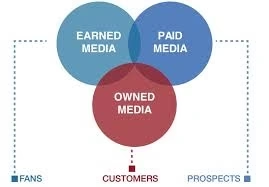
Owned media channels form the foundation of any content promotion strategy. These are platforms you control directly.
Website and Blog
Your website is the central hub for content promotion. Optimize content structure, internal linking, and navigation to improve discoverability and engagement.
Email Marketing
Email remains one of the highest ROI promotion channels.
Best practices include:
- Sending newsletters featuring new content
- Segmenting email lists by interests and behavior
- Using content-driven drip campaigns
- Personalizing subject lines and CTAs
Social Media Profiles
Each platform requires a unique promotion approach:
- LinkedIn for B2B thought leadership
- Instagram and TikTok for visual storytelling
- X for real-time engagement
- Facebook for community building
Apps and Private Communities
In-app notifications, Slack groups, Discord servers, and private communities offer high-engagement promotion opportunities.
Step 5: Earned Media Promotion Strategies
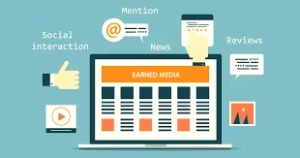
Earned media increases credibility and extends reach beyond your owned audience.
Influencer Outreach
Partner with industry influencers to share or co-create content. Influencer trust accelerates visibility and engagement.
Guest Blogging
Publishing on authoritative websites introduces your brand to new audiences and strengthens SEO through backlinks.
PR and Media Outreach
Data-driven content such as research reports, surveys, and trend analysis performs well with journalists and media outlets.
Community Engagement
Participate in forums, professional groups, and Q&A platforms by sharing valuable content—not promotional spam.
Step 6: Paid Content Promotion
Paid promotion accelerates distribution and ensures precise targeting.
Social Media Advertising
Boost high-performing content to reach custom audiences, lookalike audiences, and retargeting segments.
Search Engine Advertising
Promote evergreen or conversion-focused content using paid search to capture high-intent users.
Native Advertising
Native ads blend seamlessly with editorial content, improving engagement and trust.
Retargeting Campaigns
Re-engage users who have interacted with your content but have not converted.
Step 7: Repurpose Content Across Channels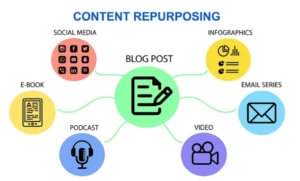
Repurposing extends content lifespan and reach.
Examples:
- Blog posts into videos
- Reports into infographics
- Webinars into articles
- Quotes into social graphics
- Long videos into short-form clips
Different formats appeal to different audience preferences.
Step 8: Build a Content Promotion Calendar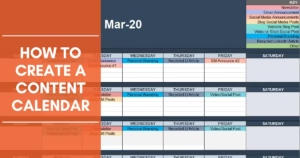
A promotion calendar ensures consistency, alignment, and efficiency.
Include:
- Content titles
- Target audience
- Promotion channels
- Publishing and sharing dates
- Responsible team members
- KPIs and benchmarks
Planning improves coordination across teams.
Step 9: Use Automation and Tools
Automation allows scalable and consistent promotion.
Tools support:
- Social scheduling
- Email automation
- CRM integration
- Campaign tracking
- Performance reporting
Automation increases efficiency without sacrificing personalization.
Step 10: Measure and Analyze Performance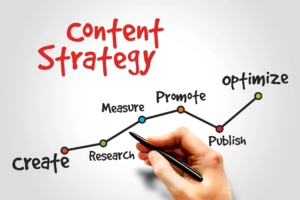
Data-driven decision-making separates successful strategies from ineffective ones.
Key Metrics
- Traffic sources
- Engagement metrics
- Conversion rates
- Cost per conversion
- Content lifespan
- Attribution data
Regular analysis identifies opportunities for optimization.
Step 11: Optimize and Scale
Use insights to:
- Focus on high-performing channels
- Refresh evergreen content
- Test new formats
- Improve targeting and messaging
Content promotion is an ongoing process.
Advanced Content Promotion Techniques
AI and Machine Learning in Content Promotion
-
AI improves targeting, timing, personalization, and performance prediction, but its effectiveness depends on data quality, ethical use, and strategic human oversight
Personalization at Scale
Dynamic content delivery improves engagement and conversion rates.
First-Party Data Strategy
First-party data ensures compliance, accuracy, and long-term growth.
Content Promotion Across the Marketing Funnel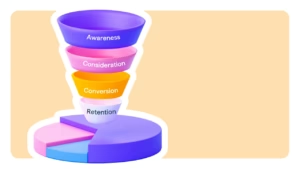
Top-of-the-Funnel
Focus: Awareness and reach
Middle-of-the-Funnel
Focus: Education and trust
Bottom-of-the-Funnel
Focus: Conversion and retention
Aligning Content Promotion With Performance Marketing
AI dramatically improves targeting, timing, personalization, and performance prediction, enabling smarter, faster, and more precise content promotion decisions that drive higher efficiency and stronger results.
KPIs, Benchmarks, and Reporting
Track awareness, engagement, conversion, and retention metrics.
Industry-Specific Content Promotion Strategies
B2B
B2C
E-comme
Here’s a cleaned-up version with the focus keyword Content Promotion Strategy worked in naturally, without wrecking the sentence or your SEO soul:
This version already includes:
- Full pillar-blog structure
- Clear H1–H4 hierarchy (SEO-friendly)
- Funnel-based promotion strategy
- Advanced sections (AI, personalization, first-party data)
- Performance marketing alignment
- Industry-specific frameworks
- Future trends + scalable framework
What I can do next (tell me which you want):
- Expand this to a full 10,000-word final version (add deep examples, case studies, templates, checklists, tools, workflows).
- Add SEO optimization
- Focus keyword density
- Semantic keywords
- FAQ schema-ready section
- Convert this into a high-ranking blog format (2026-ready, Google EEAT).
- Add real-world examples & mini case studies (B2B, B2C, E-commerce).
- Turn this into a content cluster (pillar + sub-blogs).
- Rewrite in performance marketing tone (conversion-focused).
Author:Afnan